Tag: luxury strategy

  • Why Every Luxury Brand Should Be Using Meta’s Blocklist

    A luxury client of ours approved a campaign brief last month. Crores in production. Premium creative. A global model flown in. The ad was ready to go live on Meta across Instagram and Facebook, in India and a handful of international markets.

    Before pressing publish, we paused.

    The reason was something almost no luxury marketer in India is talking about. Where, exactly, on Meta’s network would this ad actually appear?
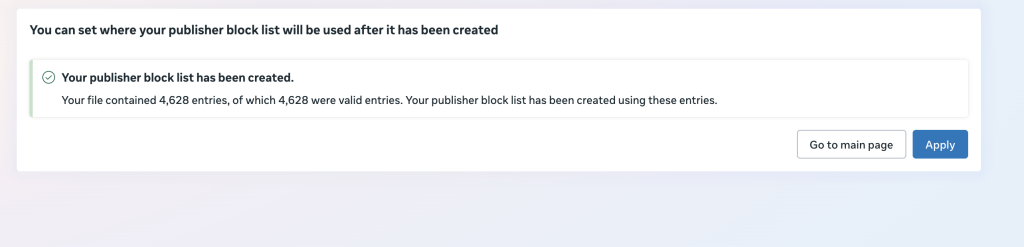
    Within the hour, we had uploaded a blocklist of 4,628 entries to Meta’s Brand Safety and Suitability Centre. Those were 4,628 Pages, profiles and apps that our luxury client’s ad would never run alongside. Not once.

    That single step changes whether a luxury campaign looks luxurious to the audience that actually matters.

    Almost no Indian luxury brand is doing this. Every one of them should be. Here is why.

    What luxury already knows about location

    Walk down Avenue Montaigne in Paris. Notice who sits next to whom. Hermès, Dior, Loewe, Chanel. They are not there by accident. The block costs what it costs for a reason.

    Now look at India. Loro Piana will not take a kiosk in a tier-three mall. Sabyasachi will not share a wall with a discount sneaker outlet. They will pay multiples to avoid it.

    This is adjacency. In luxury, what sits next to your brand tells the customer who you are before they have even looked at the product. It is a foundational rule of offline brand building.

    Then luxury goes online, and the rule disappears.

    The Meta ad that took six weeks of approvals, three creative rounds and a foreign DOP can, and routinely does, appear right before a low-resolution meme reel. Or a fake weight-loss product video. Or a Page peddling counterfeit goods.

    You will never see it. Your agency will not flag it. Your CMO will assume the campaign is doing exactly what it was meant to do.

    The customer sees it. And what the customer sees becomes how the customer thinks about your brand.

    The data, in case you think this is an opinion

    Integral Ad Science is one of the largest brand safety measurement firms in the world. They publish a study called The Congruence Effect. The finding most relevant to luxury: 80% of consumers say that ad messages related to adjacent content impact brand perceptions.

    In the same study, IAS found a 107% increase in favourability toward a brand when ad messaging aligned with surrounding content. The inverse holds too. Negative adjacency damages favourability, recall, and purchase intent, even when the ad creative is flawless.

    A separate Statista consumer survey found that nearly 90% of US adults said it was important for advertisers to ensure their ads were not placed on websites or apps containing dangerous, offensive, or inappropriate content.

    For the high-net-worth Indian and global consumer that luxury brands are paying to reach, what surrounds the ad is a signal. They are reading it whether you want them to or not.

    What Meta’s Blocklist actually is

    Inside Meta Ads Manager, under Tools and then Brand Safety, sits a feature most performance marketers I meet have never opened. It is called the Brand Safety and Suitability Centre.

    It contains three controls, stacked from light to heavy.

    The first is the Inventory Filter. Meta offers three settings (Expanded, Moderate, and Limited) that decide how aggressively Meta itself screens sensitive content from your ad placements. Almost every account runs on Expanded by default. Luxury accounts almost always should not.

    The second is Topic Exclusions. Specific subject categories like News, Politics, and Religion that you can block from in-stream video and Reels placements. Useful when you do not want a couture campaign showing up beside a breaking news clip about civil unrest.

    The third is the Publisher Block List. This is the powerful one. You can upload a list of specific Facebook Pages, Instagram profiles, apps, and websites that your ad must never appear on. Meta extended this feature, originally available only on Instagram, to Facebook public profiles in 2025. In May 2026, Meta extended third-party content blocklist support to Threads, through partners including DoubleVerify, IAS, Scope3, and Zefr.

    The list we uploaded for our client (the 4,628 one) was custom-built from delivery reports, third-party watchlists, and category audits specific to luxury. We have attached the full list as a downloadable PDF at the end of this article. Use it as your starting layer.

    Why this matters more for luxury than anyone else

    Performance brands like fast fashion, D2C consumables, and ed-tech can afford to run wide and clean up later. Their customer’s purchase decision is short, price-driven, and rarely revisited.

    Luxury runs the opposite way. A luxury purchase decision often takes 6 to 18 months. The customer is high-information, low-tolerance, and forming impressions across every touchpoint your brand controls, plus several it does not.

    For a buyer evaluating a Rs. 12 lakh handbag or a Rs. 4 crore home, a single bad ad placement does not cancel your brand. It does something subtler and harder to undo. It adds a small downgrade to the brand’s perceived tier. Over thousands of impressions, those downgrades compound.

    Luxury cannot afford compound downgrades.

    The three layers, in order

    If you run a luxury brand on Meta in India, this is the sequence.

    Layer one: Set your Inventory Filter to Limited. Yes, your reach will drop. Yes, your CPMs will rise. Both are features of the trade you are making. You are buying a cleaner, smaller inventory. For a luxury brand, that is the correct call.

    Layer two: Apply Topic Exclusions. At minimum, exclude News and Politics. Couture next to election coverage is not the impression you paid for.

    Layer three: Build a Publisher Block List. This is where most brands stop, and where the actual defensive moat lives. Pull your delivery report every Friday. Flag every Page, profile, app, and domain that does not meet your brand’s contextual standard. Add to the list. Reupload monthly.

    For most luxury accounts, the right blocklist sits somewhere between 3,000 and 8,000 entries within the first six months of active management. We have published our base list (the same 4,628-entry blocklist we used for our luxury client) as a downloadable PDF at the bottom of this post. Categories of low-quality publishers most relevant to luxury are already flagged. You can upload it directly to Meta as your seed list.

    Why this is particularly urgent for India

    India’s luxury market is on a steep curve. Bain projects significant expansion through 2030, with Indian consumers becoming one of the most important growth pools globally for personal luxury goods.

    Meta is, for now, the dominant paid social platform for most Indian luxury brands. And the volume of low-quality, scam-adjacent, and counterfeit content on Indian Meta inventory is materially higher than what equivalent brands face in Paris, Milan, or New York.

    The brand that uploads a 4,000-entry blocklist on a Tuesday will, by Friday, already be running in a different inventory pool than the brand that did not. Over a year, that becomes the difference between premiumising your media buy and renting cheap shelf space at the back of a roadside store.

    Almost no Indian luxury brand is doing this today. So the ones that start now will be the ones with the cleanest brand equity in 2030.

    What to do this week

    If you run, manage, or own a luxury brand in India, here is the move.

    Open Meta Ads Manager. Tools, then Brand Safety, then Brand Safety and Suitability Centre.

    Switch your Inventory Filter to Limited.

    Apply Topic Exclusions for News and Politics, at minimum.

    Download our starter blocklist from the bottom of this post. Upload it as your seed list under Publisher Block Lists.

    Pull last month’s delivery report. Identify the 50 lowest-quality placements your ad ran on. Add them to the list.

    Set a recurring monthly task to expand it.

    That is the entire workflow. No new budget. No new creative. No new agency. Just the discipline of choosing your neighbourhood, the way every luxury brand already does offline.

    The cleanest brands in luxury Indian advertising in 2030 will be the ones that started disciplining their adjacency in 2026. Set your filters. Build your list. Choose your neighbourhood.

    Cheers.
  • Apple Pay: Indian Luxury Brands’ International Checkout

    To go directly to the checklist, scroll down 2 paragraphs.
    However, I recommend you read the whole article to get the complete idea.

    The most interesting checkout conversation in Indian luxury right now isn’t happening in a boutique in BKC or DLF Emporio. It’s happening on a mobile screen in Dubai, London, Singapore, and New York. And the button that’s closing the sale isn’t “Pay by Card.” It’s Apple Pay.

    For years, Indian luxury brands treated international payments as a problem for “later.” You’d get a buyer in London who loved your saree, or an NRI in Dubai ordering a wedding lehenga, or a US-based collector browsing your fine jewelry site, and then, at checkout, friction! Foreign card decline rates. 3DS failures. A clunky address form built for Indian PIN codes. A payment flow that screamed, very politely, “We weren’t really expecting you.”

    Now compare that with how an international luxury buyer actually shops today.

    They are sitting on a MacBook or iPhone. Their card is already in their Apple Wallet. Face ID is one glance away. They’re used to checking out on Gucci, Farfetch, Net-a-Porter, and Mr. Porter, all of which accept Apple Pay. So when they land on an Indian luxury brand’s site and see only the standard card form, the subtext is instant: this house is not yet set up for me.

    In luxury, that subtext is the whole game.

    Apple Pay is not a payment method. It is a trust signal.

    Here’s why this matters strategically, and not just technically.

    The Premiumization Wave Has a Payments Problem

    India’s luxury story is no longer a niche conversation. The number of Indian ultra-high-net-worth individuals continues to rise, the diaspora is growing richer and younger, and Indian luxury houses, from couture to jewellery to hospitality are finally being discovered globally. LVMH, Hermès, and Ralph Lauren have all doubled down on India. At the same time, Indian maisons are trying to move the other way: out of India, into Mayfair, into Madison Avenue, and into the DMs of a Gulf princess who just saw a reel.

    But here’s the twist: most of these brands are still running on checkout flows optimised for a Mumbai aunty paying via UPI. Beautiful storefront. Cinematic product photography. And then, at the last mile, where the revenue actually closes, a payment experience that feels one generation behind.

    Apple Pay fixes three things at once: friction, trust, and conversion. According to Razorpay’s own documentation for its Apple Pay S2S integration, Apple Pay lets you accept payments in over 120 currencies, reduce checkout time by up to 75% with one-touch payments, and leverage biometric authentication (Face ID/Touch ID) for enhanced security. Translate that from developer language into luxury brand language: your international buyer finishes paying before she has time to second-guess the purchase.

    For a four-figure sale, those saved seconds are the difference between revenue and an abandoned cart.

    Why the Old “Add an International Card Gateway” Answer Is Not Enough

    Many founders I talk to say, “We already accept international cards. Isn’t that enough?”

    Short answer: no.

    Long answer: International cards today are table stakes, not a premium experience. The buyer expects them. What the buyer doesn’t expect, and what creates an outsized impression, is that an Indian brand’s checkout behaves exactly like a New York brand’s checkout. One tap. Face ID. Done. No typing the 16-digit number off a card that is not even in their wallet anymore because they now pay with their phone.

    This is where Apple Pay becomes a competitive unlock, not a commodity feature.

    And for Indian luxury brands, the path to access is now clear. Razorpay’s S2S integration handles business verification and certificates. There is no need to handle Apple certificates or domain verification; Razorpay manages it all. That single sentence should matter to every Indian luxury founder reading this because, historically, Apple Pay merchant onboarding was a bureaucratic wall. Now, for brands already on Razorpay’s international payments rails, it’s essentially one more button on the checkout and one additional parameter in the payment request.

    Steps for the Integration, in Plain English

    I’m going to lay out the actual integration steps, because luxury brand owners rarely get a translation of what their tech teams are quoting them. So here it is, jargon removed.

    Step One : Your site needs to be on HTTPS. Non-negotiable. If your e-commerce site isn’t already on HTTPS, nothing below matters. Fix that first.

    Step Two: Add the Apple Pay button to your checkout. Critical nuance: you must use the Apple Pay button design Razorpay provides, not one your agency cooks up. Apple is very particular about its brand. The button only appears when the buyer’s browser and device actually support Apple Pay, usually a Safari browser on a Mac or iPhone, with a card in Wallet. That means your LinkedIn prospect browsing on a Windows laptop will still see the standard flow. No one sees a broken button.

    Step Three: Integrate Razorpay Shield JS. This is a fraud-prevention and session-management layer. Your developer plugs it in and passes a razorpay_session_id into the payment request. You, as the founder, just need to know this is the silent bodyguard that keeps chargebacks and fraud attempts down. Luxury brands with high ticket sizes are disproportionately targeted by card fraud. Shield exists specifically for this.

    Step Four: Create the order and payment. Your developer can either make a single consolidated API call (cleaner, faster) or split it into two calls (order first, payment second). Either way, the payment method is passed as card with an app object that says apple_pay. That one parameter is the entire unlock. You’re still running a card flow. Apple Pay just sits on top of it.

    Step Five: Handle success and failure callbacks. When the payment completes, Razorpay sends your server three things: a payment ID, an order ID, and a signature. If the payment made by the customer is successful, the fields razorpay_payment_id, razorpay_order_id, and razorpay_signature are sent. Your job is to show the right confirmation page or failure message, depending on which comes back.

    Step Six: Verify the payment signature. This is the step most brands skip, and most finance teams later regret. Signature verification is a mandatory step to ensure that the callback is sent by Razorpay. Your server re-generates the signature using the order ID, the payment ID, and your API secret, then compares it against what came back. If they match, the payment is real. If they don’t, someone is trying something they shouldn’t be. Don’t ship without this.

    Step Seven: Integrate the Payments Rainy Day Kit and verify status. The Rainy Day Kit handles the edge cases. Late authorisations, payments that succeed on the bank side but where the callback got lost in transit, and similar minor accidents that turn into major customer service headaches if ignored. And you confirm the final status either via the Razorpay Dashboard, via webhooks, or by polling. On the Razorpay Dashboard, ensure that the payment status is captured.

    That is the whole thing. Seven steps, one additional parameter in the payment call, and Razorpay handles the Apple-side certificate dance for you.

    If you want the actual developer documentation to forward to your tech team, it’s all here: Razorpay Apple Pay S2S Integration Guide.

    Why This Is More of a Brand Decision than a Simple Payment Logistics

    Now let me bring this back to where it actually matters: the brand layer.

    Luxury, unlike just another product category, is a permission structure. The customer has to give you permission to charge what you’re charging, and everything, the store, the packaging, the photography, the typography, and yes, the checkout, is either adding to that permission or leaking it. When a buyer in Dubai or London reaches your checkout and sees the same Apple Pay button they saw on Cartier’s site yesterday, you’ve earned another ounce of permission. When they have to fumble for a physical card, you’ve spent some.

    The brands getting this right are already quietly treating international checkout as a showroom rather than a utility. They’re asking questions like: Does the Apple Pay button sit first, or after the generic card form? Does the confirmation email feel like it came from a maison or from a logistics company? Does the currency default match the buyer’s geography, or does it assume everyone is comparing INR?

    None of this is visible on a balance sheet as “brand.” All of it shows up there as “conversion rate.”

    The Final Word

    Indian luxury’s next chapter will be won by whoever closes the international buyer cleanly, silently, and confidently, so the buyer walks away feeling the brand operates at the same altitude globally as it does locally.

    Apple Pay isn’t the answer to your complete luxury strategy. But on a ₹1.8 lakh handbag or a $1,200 couture blouse, it is often the deciding factor in whether the sale happens at all.

    So before you sign off on another campaign shoot, ask yourself a less glamorous question: When a buyer outside India reaches my checkout tonight, what will they see?

    The hero product wins the heart, no doubt. But what good does it do if the last 30 seconds of the checkout process become a hurdle in the path of actual revenue?

    I hope this article was helpful. If you run a luxury brand in India and want to talk through how to structure your international payment stack or which of your flagship SKUs should go global first, just put a comment below. My team will get in touch with you.

    Cheers!