Tag: Business Strategy

  • Why Every Luxury Brand Should Be Using Meta’s Blocklist

    A luxury client of ours approved a campaign brief last month. Crores in production. Premium creative. A global model flown in. The ad was ready to go live on Meta across Instagram and Facebook, in India and a handful of international markets.

    Before pressing publish, we paused.

    The reason was something almost no luxury marketer in India is talking about. Where, exactly, on Meta’s network would this ad actually appear?
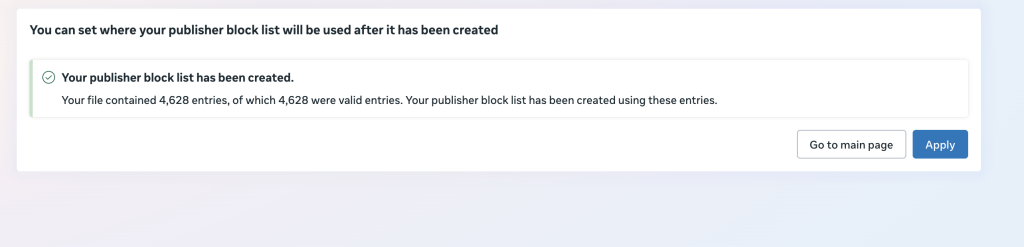
    Within the hour, we had uploaded a blocklist of 4,628 entries to Meta’s Brand Safety and Suitability Centre. Those were 4,628 Pages, profiles and apps that our luxury client’s ad would never run alongside. Not once.

    That single step changes whether a luxury campaign looks luxurious to the audience that actually matters.

    Almost no Indian luxury brand is doing this. Every one of them should be. Here is why.

    What luxury already knows about location

    Walk down Avenue Montaigne in Paris. Notice who sits next to whom. Hermès, Dior, Loewe, Chanel. They are not there by accident. The block costs what it costs for a reason.

    Now look at India. Loro Piana will not take a kiosk in a tier-three mall. Sabyasachi will not share a wall with a discount sneaker outlet. They will pay multiples to avoid it.

    This is adjacency. In luxury, what sits next to your brand tells the customer who you are before they have even looked at the product. It is a foundational rule of offline brand building.

    Then luxury goes online, and the rule disappears.

    The Meta ad that took six weeks of approvals, three creative rounds and a foreign DOP can, and routinely does, appear right before a low-resolution meme reel. Or a fake weight-loss product video. Or a Page peddling counterfeit goods.

    You will never see it. Your agency will not flag it. Your CMO will assume the campaign is doing exactly what it was meant to do.

    The customer sees it. And what the customer sees becomes how the customer thinks about your brand.

    The data, in case you think this is an opinion

    Integral Ad Science is one of the largest brand safety measurement firms in the world. They publish a study called The Congruence Effect. The finding most relevant to luxury: 80% of consumers say that ad messages related to adjacent content impact brand perceptions.

    In the same study, IAS found a 107% increase in favourability toward a brand when ad messaging aligned with surrounding content. The inverse holds too. Negative adjacency damages favourability, recall, and purchase intent, even when the ad creative is flawless.

    A separate Statista consumer survey found that nearly 90% of US adults said it was important for advertisers to ensure their ads were not placed on websites or apps containing dangerous, offensive, or inappropriate content.

    For the high-net-worth Indian and global consumer that luxury brands are paying to reach, what surrounds the ad is a signal. They are reading it whether you want them to or not.

    What Meta’s Blocklist actually is

    Inside Meta Ads Manager, under Tools and then Brand Safety, sits a feature most performance marketers I meet have never opened. It is called the Brand Safety and Suitability Centre.

    It contains three controls, stacked from light to heavy.

    The first is the Inventory Filter. Meta offers three settings (Expanded, Moderate, and Limited) that decide how aggressively Meta itself screens sensitive content from your ad placements. Almost every account runs on Expanded by default. Luxury accounts almost always should not.

    The second is Topic Exclusions. Specific subject categories like News, Politics, and Religion that you can block from in-stream video and Reels placements. Useful when you do not want a couture campaign showing up beside a breaking news clip about civil unrest.

    The third is the Publisher Block List. This is the powerful one. You can upload a list of specific Facebook Pages, Instagram profiles, apps, and websites that your ad must never appear on. Meta extended this feature, originally available only on Instagram, to Facebook public profiles in 2025. In May 2026, Meta extended third-party content blocklist support to Threads, through partners including DoubleVerify, IAS, Scope3, and Zefr.

    The list we uploaded for our client (the 4,628 one) was custom-built from delivery reports, third-party watchlists, and category audits specific to luxury. We have attached the full list as a downloadable PDF at the end of this article. Use it as your starting layer.

    Why this matters more for luxury than anyone else

    Performance brands like fast fashion, D2C consumables, and ed-tech can afford to run wide and clean up later. Their customer’s purchase decision is short, price-driven, and rarely revisited.

    Luxury runs the opposite way. A luxury purchase decision often takes 6 to 18 months. The customer is high-information, low-tolerance, and forming impressions across every touchpoint your brand controls, plus several it does not.

    For a buyer evaluating a Rs. 12 lakh handbag or a Rs. 4 crore home, a single bad ad placement does not cancel your brand. It does something subtler and harder to undo. It adds a small downgrade to the brand’s perceived tier. Over thousands of impressions, those downgrades compound.

    Luxury cannot afford compound downgrades.

    The three layers, in order

    If you run a luxury brand on Meta in India, this is the sequence.

    Layer one: Set your Inventory Filter to Limited. Yes, your reach will drop. Yes, your CPMs will rise. Both are features of the trade you are making. You are buying a cleaner, smaller inventory. For a luxury brand, that is the correct call.

    Layer two: Apply Topic Exclusions. At minimum, exclude News and Politics. Couture next to election coverage is not the impression you paid for.

    Layer three: Build a Publisher Block List. This is where most brands stop, and where the actual defensive moat lives. Pull your delivery report every Friday. Flag every Page, profile, app, and domain that does not meet your brand’s contextual standard. Add to the list. Reupload monthly.

    For most luxury accounts, the right blocklist sits somewhere between 3,000 and 8,000 entries within the first six months of active management. We have published our base list (the same 4,628-entry blocklist we used for our luxury client) as a downloadable PDF at the bottom of this post. Categories of low-quality publishers most relevant to luxury are already flagged. You can upload it directly to Meta as your seed list.

    Why this is particularly urgent for India

    India’s luxury market is on a steep curve. Bain projects significant expansion through 2030, with Indian consumers becoming one of the most important growth pools globally for personal luxury goods.

    Meta is, for now, the dominant paid social platform for most Indian luxury brands. And the volume of low-quality, scam-adjacent, and counterfeit content on Indian Meta inventory is materially higher than what equivalent brands face in Paris, Milan, or New York.

    The brand that uploads a 4,000-entry blocklist on a Tuesday will, by Friday, already be running in a different inventory pool than the brand that did not. Over a year, that becomes the difference between premiumising your media buy and renting cheap shelf space at the back of a roadside store.

    Almost no Indian luxury brand is doing this today. So the ones that start now will be the ones with the cleanest brand equity in 2030.

    What to do this week

    If you run, manage, or own a luxury brand in India, here is the move.

    Open Meta Ads Manager. Tools, then Brand Safety, then Brand Safety and Suitability Centre.

    Switch your Inventory Filter to Limited.

    Apply Topic Exclusions for News and Politics, at minimum.

    Download our starter blocklist from the bottom of this post. Upload it as your seed list under Publisher Block Lists.

    Pull last month’s delivery report. Identify the 50 lowest-quality placements your ad ran on. Add them to the list.

    Set a recurring monthly task to expand it.

    That is the entire workflow. No new budget. No new creative. No new agency. Just the discipline of choosing your neighbourhood, the way every luxury brand already does offline.

    The cleanest brands in luxury Indian advertising in 2030 will be the ones that started disciplining their adjacency in 2026. Set your filters. Build your list. Choose your neighbourhood.

    Cheers.

  • Why Fenty Fashion X LVMH Failed: A Luxury Brand Lesson in Category, Not Celebrity

    The standard story is that Rihanna’s fashion house failed because celebrity alone could not carry it. That story is now five years old. It has also aged badly.

    The more interesting question, and the one luxury operators should be asking in 2026, is why even Fenty Beauty (the supposed proof the model worked) is now being shopped around by LVMH at a $1–2 billion valuation, with North American sales reportedly down double digits. The Fenty episode was never really a story about celebrity. It was, and is, a story about category.

    The deal that looked impossible to lose

    On 22 May 2019, in Paris, LVMH and Rihanna launched a ready-to-wear maison from scratch. Only the second time Bernard Arnault’s group had tried to build a fashion house rather than buy one. The first was Christian Lacroix in 1987.

    Rihanna became the first woman to launch an original brand within the group, and the first woman of colour to lead an LVMH maison. Each side reportedly put in around €30 million. Twenty-one months later, on 10 February 2021, the maison was paused. Accounts filed by Rihanna’s UK holding entity, which surfaced in late 2025, put her personal loss at roughly $36 million.

    LVMH’s public language was a strategic recalibration. The internal warning had been louder and earlier. In October 2020, the group’s CFO, Jean-Jacques Guiony, told analysts the brand was still in the launching phase and that figuring out the right offer was not easy. That was four months before the closure. The pandemic was the accelerant, not the cause.

    The three reasons every case study keeps teaching

    The diagnosis is now well-rehearsed. It is also worth sharpening.

    1. Pricing without permission: Pieces ran roughly $200 to $1,500, with a denim jacket near a thousand dollars. That is a price built for a customer Rihanna’s mass-cultural fanbase mostly does not contain. The audience that crashed Fenty Beauty’s site for a $39 foundation does not automatically move on to four-figure ready-to-wear.

    2. Distribution against type: Fenty Maison sold mostly through its own dot-com, with low-key pop-ups at Bergdorf Goodman and Galeries Lafayette. Luxury fashion is theatre. Runway, atelier, flagship, the slow build of social proof on the bodies of editors and clients. Digital-first launches a beauty brand. It rarely scales a maison.

    3. A meaning gap: Fenty Beauty answered an audible market question on day one: forty foundation shades, inclusivity engineered into the product itself. Fenty Fashion never landed the equivalent answer. Why this house, at this price, with this point of view? Not in a language a buyer, an editor, or a stockist could repeat back without prompting.

    The lesson is structural, not anecdotal

    What most case studies miss is that LVMH’s failure mode here was not new.

    Christian Lacroix, the previous launch-from-scratch attempt, accumulated more than €44 million in cumulative losses across eighteen years before the group sold it in 2005. It filed for bankruptcy four years later. Edun, the celebrity-led label LVMH was also associated with, was wound down in 2018.

    Across three different decades, the pattern is the same. LVMH has a near-flawless playbook for acquiring established maisons, and almost no working playbook for building one. Putting an unprecedented founder at the helm of an unprecedented launch did not change the underlying mechanics. (I’ve written about the full arc of that partnership in LVMH × Rihanna: When Stars Fall.)

    This is the part operators should pay attention to. Fenty Fashion did not stall because Rihanna could not sell luxury. It stalled because LVMH was running a beauty incubator dressed up as a fashion launch.

    Why the 2026 footnote matters

    The cleaner reading was always that Fenty was a tale of two categories. Fashion stalled, beauty scaled. That reading is now under pressure.

    In October 2025, Reuters reported that LVMH was exploring a sale of its 50% stake in Fenty Beauty. Business of Fashion and Puck have since put the target valuation at $1–2 billion. Net sales were still around $450 million in 2024, but peak revenue was reportedly in 2021, and a source close to Sephora has said North American sales are now down double digits.

    That reframes the original failure. What looked, in 2021, like proof that celebrity-led beauty was a durable model now looks more like a half-decade window of borrowed cultural relevance. Vivid. Valuable. Finite. The founder cannot be the daily storyteller forever. The category has to take over.

    What this means for India’s luxury moment

    India’s luxury market is being shaped by exactly this temptation. Reliance has just brought Fenty Beauty into the country through Sephora and Tira. The next move is almost inevitable. An Indian conglomerate will, soon, bankroll a domestic celebrity-fronted luxury label. The country’s first Fenty-style swing.

    Built on real category logic, this works. Run as a hype play, it ends in twenty-one months and a write-off. The discipline is to ask, before signing the term sheet, the question Fenty Fashion could not answer. What is the unmet need this category lets us solve, and what is the architecture (pricing, distribution, craft, narrative) that protects that answer once the founder’s spotlight moves elsewhere?

    Hype gets the launch. Architecture keeps the company.

    The cheapest place to learn this is somebody else’s $36 million.

  • Luxury Market – Dying or Evolving?

    Luxury Brands: The Rich Get Richer, But What About the Rest?

    The luxury market has reached a fascinating moment in its history, where the upper-luxury giants are shining, but the mid-luxury players are feeling a little shady (pun intended). While some brands continue to flaunt their wealth, others are showing signs of wear and tear, especially on the stock market. If you’ve been keeping an eye on the luxury sector, you’ll know that brands like Gucci, LVMH, and Prada are seeing their stock prices slip, but there’s a very different story unfolding for high-end players like Hermès. So, what’s going wrong? And how do we turn these challenges into opportunities? Let’s dive in!

    What’s Going Wrong for Mid-Luxury Brands?

    Several factors have come together to squeeze mid-luxury brands between a rock and a hard place, and some are starting to crack under the pressure.

    1. Demand Slowdown & Consumer Retreat

    Remember when luxury was the hottest thing in town? Well, that post-pandemic luxury boom? It’s fading fast. Gucci, a crown jewel in Kering’s portfolio, reported a 25% drop in sales during Q1 of 2025. And let’s not forget that a whopping 10% of luxury consumers have pulled away from their favorite brands due to endless price hikes. It’s like that feeling when you get invited to a fancy restaurant and suddenly realize your wallet’s been left behind. Not fun.

    2. Mid-Luxury Brands in the Middle of Nowhere

    This is where it gets tricky. Mid-luxury brands, those that previously thrived on volume and aspirational branding, are caught in a bit of a middle-child syndrome. Not high enough to be elite, and not accessible enough to the masses. As Economy Insights puts it, “Growth pools at the very top … the center is thinning.” And, oh boy, is that thinning fast.

    So, Why Are the Upper-Luxury Brands Thriving?

    Here’s the twist – while many mid-luxury brands are struggling, upper-luxury brands like Hermès are holding strong, thanks to a combination of savvy strategy and timeless elegance. It’s not magic; it’s strategic brilliance.

    1. Scarcity & Supply Control: The Hermès Magic

    Hermès has mastered the art of keeping things scarce. You’ve probably seen the Birkin or Kelly bags on waitlists longer than most people’s New Year’s resolutions. The result? Desirability through scarcity. As the saying goes, “The more you have of something, the less you want it.” Which makes the inverse also true – when you can’t have something, that’s when you really want it, right?

    2. Timelessness Over Trends

    Hermès doesn’t jump on the latest trend bandwagon. It doesn’t need to. While other brands are busy chasing seasonal trends, Hermès is focused on creating products that stand the test of time. As Coco Chanel famously said, “Fashion fades, only style remains the same.” And Hermès knows that to perfection.

    3. Direct Sales Model & Premium Pricing

    Hermès doesn’t flood the market with its products. Instead, it controls its distribution fiercely, relying on direct sales (hello, exclusive boutiques!) and avoiding wholesale channels that can dilute the brand’s value. That means fewer stores, fewer discounts, and more premium pricing. It’s not just about selling – it’s about selling to the right people, the right way.

    4. Targeting the Top Tier

    Hermès isn’t worried about appealing to the average consumer. It focuses on top-tier customers whose wallets aren’t feeling the pinch. The wealthiest consumers are far less likely to be affected by global uncertainties, so Hermès is largely immune to the pressures that are dragging other brands down. It’s like throwing a party and only inviting the VIPs – you know, the ones who bring the champagne (not the boxed wine). 🍾

    And Then, the Trump Tariffs Came…

    If mid-luxury brands weren’t facing enough trouble, they were hit with a geopolitical bomb: Trump’s tariffs on European luxury goods.

    In 2025, the U.S. government announced tariffs on European luxury exports, including fashion, leather goods, and watches. These tariffs were a game-changer for brands like Gucci, Prada, and Louis Vuitton, which rely heavily on the U.S. market for sales. The idea? To raise the cost of importing European luxury items into the U.S., making them more expensive for American consumers.

    And, as you’d expect, it wasn’t pretty. LVMH, Kering, and other luxury giants saw their stock prices dip as tariffs loomed, with LVMH experiencing a 3-4% instant drop in shares.

    The Tariff Aftermath

    So, what happened when the tariffs were paused or rolled back? Well, some brands were quick to adjust. Hermès started raising prices in the U.S. to compensate for the anticipated tariffs. And LVMH decided to expand its production in the U.S. to sidestep these geopolitical uncertainties.

    Interestingly, Swiss watch exports surged ahead of the tariffs. Sales jumped 18.2% in April 2025 as U.S. consumers bought in advance to avoid price hikes. Talk about getting ahead of the game!

    So, What Can Luxury Brands Learn From All This?

    Here’s the deal: if you’re a luxury brand today, you need to get strategic. Don’t just play for short-term volume. Think about long-term sustainability. It’s time to return to the basics, the stuff that works.

    1. Reassess Your Positioning

    Ask yourself: Are you just chasing volume growth, or are you creating true brand equity? If you’re stuck in the middle, now is the time to either move up or differentiate. As the wise business mind Michael Porter once said, “The essence of strategy is choosing what not to do.”

    2. Focus on Margins, Not Just Sales

    Just like Hermès, focus on operating margins and building an economically disciplined operation. If your margins dip below 20-25%, it’s time to re-evaluate. High margins aren’t just nice to have; they’re essential for long-term survival in the luxury space.

    3. Control Your Distribution

    Keep your products exclusive. Avoid over-expanding into outlets or discounting too heavily. Remember, controlled scarcity creates the kind of desire that drives high-end sales.

    4. Timelessness Over Trends

    In a world that’s constantly changing, timeless designs and products will always stand out. Build an offering that lasts forever rather than chasing short-lived trends.

    Glimmer Of Hope

    Let’s talk about Tapestry, the parent company of Coach and Kate Spade, which is having a stellar run in a market that’s struggling. While many mid-luxury brands are feeling the pinch, Tapestry has racked up a jaw-dropping 600% return over the past five years. What’s their secret? Unlike brands that are trying to please everyone, Tapestry has focused on premium positioning with a targeted, loyal customer base. Their strong performance in North America and disciplined approach to inventory management have helped them sidestep the volume-driven struggles faced by others. In short, they’ve cracked the code by being quality-focused and relationship-driven, not mass-market. Point being, if you follow the rules of the trade, you’ll outshine the rest; it doesn’t matter if you’re mid or ultra luxury.

    The Final Word

    As Coco Chanel put it (yes, I live by their quotes and so should you): “Luxury must be comfortable, otherwise it is not luxury.” Brands that can comfortably adapt to market shifts, build lasting relationships, and focus on timeless quality will remain at the top of the luxury heap.
    The luxury market isn’t dying – it’s just evolving. 

    I hope my analysis helps you build a brand that can adapt to this continual evolution while sticking to its roots.

    Cheers!

  • Cyberattacks on Luxury Brands: When Cybersecurity Becomes a Luxury

    The luxury sector has long prided itself on offering exclusive, high-end experiences. From personalized shopping to impeccable customer service, it’s all about trust and elegance. But in the digital age, trust extends beyond what you can touch and feel. It’s all about safeguarding your customers’ most sensitive information. And here’s the kicker: even the most exclusive brands aren’t immune to cyber threats. In fact, luxury brands have become prime targets for hackers. It seems like cybercriminals are on a mission to prove that nothing is truly secure, not even the locks of high-end boutiques.

    Let’s dive into some of the recent breaches shaking the industry and what brands can do to secure their future.

    Major Breaches: Luxury Brands Under Siege

    You may have heard about the recent cyberattacks on some of the world’s most iconic luxury brands, and the numbers are as shocking as a $100,000 price tag on a handbag.


    1. Louis Vuitton (LVMH):

    Louis Vuitton (LVMH) wasn’t spared either. In June 2025, the brand was hit by a data breach that compromised personal details of over 419,000 customers. We’re talking names, contact info, birthdates, and even passport details. That’s a serious breach for a brand that prides itself on exclusivity. The breach was traced back to unauthorized access in June and reported to regulators in July, which means the delay in communicating the breach wasn’t exactly the best look.

    2. Dior:
    Dior wasn’t far behind. After discovering a breach in May 2025, the brand took two whole months to notify its customers — an eternity in the fast-paced world of digital commerce. The compromised data included everything from customer names to purchase history. A longer notification window means a greater loss of trust, which for luxury brands is worse than a blown deadline on a limited-edition drop.

    3. Chanel and Pandora:
    Even Chanel and Pandora weren’t safe. Both brands were affected by a breach involving Salesforce’s third-party services. A vulnerability here led to customer data being exposed, and it’s clear that even the most secure internal systems can’t protect against third-party weaknesses. It’s like you locked the main door, but someone in your house left the window wide open and went to sleep.

    Stock Market Reactions: The Silent Shake-Up

    Now, you might think that cyberattacks like these would send stock prices crashing down. And in some cases, they did, at least momentarily. But here’s the thing — luxury brands like Louis Vuitton or Dior, with their deep brand loyalty, seem to have weathered the storm. Yes, their stock dipped initially, but investors aren’t rushing to sell. Why? Because in the luxury market, the allure is so strong that it often outweighs these temporary setbacks.

    As the saying goes, “a lion’s share is always worth the wait.” The true test, though, will be how these brands manage the fallout and rebuild customer trust over time.


    The Right (and Wrong) Way to Handle a Breach

    Okay, so what can luxury brands do when a breach happens? As it turns out, handling a breach is all about speed, transparency, and doing more than just putting out the fire.

    1. Dior Gets It Right:

    Dior managed the crisis relatively well by offering its U.S. customers 24 months of free credit monitoring. Talk about turning a mistake into a gesture of responsibility. And that’s not just good PR, it’s good customer service. It’s like giving your most loyal customer a custom-made gift after a mistake. It shows you care, and you’ve got their back.

    2. Chanel and Pandora, Not So Much:
    On the flip side, Chanel took months to inform affected customers. And by then, the damage was done. If you’re that late to the game, it might leave customers questioning your commitment to their privacy. We get it, sometimes the “right thing to do” isn’t always easy, but trust isn’t built on delays. It’s built on quick, decisive actions and good communication.

    Cybersecurity Audits: The New Necessity

    If you think cybersecurity is just an IT thing, think again. For luxury brands, it’s quickly becoming a key element of brand equity. A breach doesn’t just damage your database; it damages your reputation. And in the world of luxury, reputation is everything.

    So, how do you prevent these attacks? It’s not just about tightening your internal systems; it’s about ensuring that every partner in your ecosystem (like third-party suppliers or service providers) is as secure as you are. And the best way to stay ahead of the game? Regular cybersecurity audits.


    How to Conduct a Cybersecurity Audit:

    1. Hire the Experts: Get an expert cybersecurity firm to assess your system regularly. They’ll help identify vulnerabilities you might overlook. They act like a personal security guard for your brand’s data — and luxury brands can’t afford to skip this.
    2. Always Be Monitoring: Cyber threats evolve fast. Investing in 24/7 monitoring ensures your brand is always one step ahead.
    3. Train Your Team: Humans are often the weakest link in the security chain. Train your employees regularly so they can spot phishing emails or unusual activity. The more proactive, the better.
    4. Audit Your Partners: Suppliers and partners should be held to the same security standards as your internal systems. Because, let’s face it, hackers don’t discriminate.

    Important Fact: The Third-Party Problem

    Did you know that the 2013 Target data breach, which exposed over 70 million customer records, was traced back to a third-party vendor’s weak security? Fazio Mechanical Services, a vendor for Target, had its network credentials stolen, which gave hackers access to Target’s systems. A simple reminder that your supply chain can be the weak link in your cybersecurity armor.

    Conclusion: Secure Your Brand, Or Soon, Security Will Be Luxury 

    In the ever-evolving digital age, luxury brands can’t afford to rest on their laurels. Cybersecurity isn’t just a technical issue; it’s an integral part of the brand experience. So, while the world of luxury is built on exclusivity and trust, now more than ever, it’s also about security. Every click, every purchase, and every conversation with your customer is part of your brand promise. And just like you wouldn’t want a thief to walk into your boutique, you certainly don’t want hackers to break into your customer data.

    So, if you haven’t already, make sure your cybersecurity is up to par. Because in the world of luxury, the only thing more valuable than your product is your customer’s trust

    I’m here to help. If you run a luxury brand and are concerned about safety, just DM me or Comment “Safety”, and my team will do a quick security audit for you at no cost.
    No strings attached, just looking out for you.

    Cheers!

  • Why Indigo Launched Business Class

    Why Did Indigo Suddenly Launch a Business Class After 18 Years?
    So, here’s a twist no one saw coming: IndiGo, India’s beloved no-frills, low-cost airline, has just launched its first-ever business class after a solid 18 years of sticking to its budget-friendly guns. Wait, business class from IndiGo? Yup, you read that right. It’s called IndiGoStretch and, hold your horses, it’s not your traditional business class with lie-flat beds and personal screens. But let’s be honest, do we really need all those frills on a short flight? Look, I usually travel business, so I tried Indigo Stretch recently, and it might just be my go-to for domestic travels. But let’s talk business. Let’s dive into why this move makes perfect sense and why it could change the game for both IndiGo and the broader aviation industry.

    The Rise of Premiumization: Everyone Wants a Little Extra
    Recent trends are clear. We’re in the middle of what I like to call the “premiumization” wave. Basically, people are starting to crave luxury experiences but are reluctant to pay too much for them. Think about it: ₹50,000 a night for a hotel, wellness retreats that cost ₹2-5 lakh, and even high-end products being more accessible to the masses. We’re seeing this trend everywhere, from fashion to food, and yes, now in aviation. People are no longer settling for just “getting by” — they want more without having to break the bank.

    IndiGo, ever the savvy brand, has tapped into this shift. They’re keenly aware that their passengers now have higher expectations. But instead of diving headfirst into the full luxury business class experience, which comes with sky-high prices, they’ve done something smart: they’ve created IndiGoStretch – a kind of “lite” business class. Think of it as a premium economy product, offering a comfortable seat and a few extra perks, but at a fraction of the cost of traditional business class. Genius, right?

    Beating the Competition: A New Era of Affordable Premium
    Now, here’s where things get interesting. For years, Air India has had the monopoly on business class in India. But lately, it’s been getting some bad press – safety issues, inconsistent service, you name it. Not exactly the kind of image you want when you’re charging premium fares. Enter IndiGo, which has a track record for reliability, affordability, and yes, punctuality (if not perfect, way better than its peers). They’re positioning themselves as a smarter choice in the business class game.

    Let’s do the math. While Air India’s business class fares range from ₹26,000 to ₹56,000, IndiGo’s Stretch option is available for just ₹18,000 (and you get all the perks like priority boarding, extra legroom, and premium meals). So, let’s break it down. What’s the real selling point here? For travelers who want comfort and a good experience, but don’t want to spend the moon, IndiGo’s Stretch is a no-brainer. As the saying goes, “You don’t have to spend a fortune to look like a million bucks.”


    The Market Reaction: People Are Loving It
    Here’s the thing: India’s travel market is evolving. With more people flying than ever before, and airports getting more crowded, passengers are demanding more. But what they really want are small, yet significant, upgrades to their flying experience. It’s not about having all the luxury in the world, but about getting a lot more by paying a little more than what you are already spending.

    This strategy speaks to a truth in luxury marketing: value doesn’t always mean cheap; it means getting the right experience for the right price.


    What’s on Offer:
    So, what do you get when you sign up for IndiGoStretch? It’s not the full-blown business class experience with lie-flat seats and WiFi, but it does offer a solid upgrade from regular economy. Here’s the breakdown:

    • More Space: A wider seat with extra legroom – perfect for those of us who are tired of feeling like we’re packed in like sardines.
    • Priority Boarding: Because who wants to wait in long lines when they can jump the queue, right?
    • Better Food: Forget bland airplane snacks. IndiGoStretch comes with better meal options and a selection of drinks. Yes, please.
    • Exclusive Cabin: With a 2-2 seating configuration, you get more privacy than the usual cramped economy rows.

    It’s not going to be the Ritz, but for short to medium-haul flights, this is everything you need for a comfortable and efficient journey. 

    What’s Next?
    Apparently, the IndiGoStretch product is just the beginning. In the coming years, the airline plans to expand its offering to more domestic and international routes. We’re talking Singapore, Dubai, and more. It’ll be interesting to see how the Business-class airlines and travelers on these routes will react to Indigo’s upcoming offering.

    Fun Fact: IndiGo’s Fleet is Growing Fast
    Did you know IndiGo operates the largest fleet in India, with over 397 aircraft? (That’s not a typo—it’s really that big!) By 2030, they plan to have 600 planes in the sky, which means more routes for IndigoStretch.


    Final Thoughts: The Future of Affordable Luxury

    IndiGo’s launch of IndiGoStretch isn’t just about adding a new class to the lineup. It’s a smart, strategic move that meets the evolving needs of today’s travelers – those who want comfort, reliability, and good service but at a price they can actually stomach. And with the way the aviation market is heading, this could very well be the start of something big.

    Even if Indigo doesn’t break the “real-business-class” market, it surely has spotted a gap in the market and created a new segment for itself. It’s a brilliant case study for brand extension and positioning.

    I hope this article was helpful.
    Oh, and if you want to advertise your brand to business class flyers in India, just comment or DM me “Business Class” and my team will get in touch with you.

    Cheers!